Best airbrush for t shirts

f you’re looking for the best airbrush for T-shirts, choosing the right model is important. T-shirt airbrushing is different from painting models, miniatures or artwork on paper. Fabric paint is generally heavier, designs can cover a much larger area, and you’ll often need an airbrush that can spray reliably for longer periods without constantly refilling the paint.
For most T-shirt artists, our top choice is the Iwata Eclipse HP-BCS. Its siphon-feed design makes it particularly practical for textile work because it can use larger paint bottles and makes changing colours easier.
However, it isn’t automatically the best choice for everyone. If you mainly create detailed portraits, lettering or small designs, a gravity-feed airbrush such as the Iwata Eclipse HP-CS may give you the control you’re looking for.
In this guide, we’ll compare the best airbrushes for T-shirts and explain what to look for, including feed type, nozzle size, paint compatibility, air pressure and the other equipment you’ll need to get started.
Quick Answer: What Is the Best Airbrush for T-Shirts?
Our top choice for most T-shirt artists is the Iwata Eclipse HP-BCS.
The HP-BCS is a siphon-feed airbrush that combines good spray control with the larger paint capacity that makes sense for fabric painting.
Our top T-shirt airbrushes
| Airbrush | Feed type | Best for | Our rating |
|---|---|---|---|
| Iwata Eclipse HP-BCS | Siphon | Best overall T-shirt airbrush | 9.6/10 |
| Iwata Eclipse HP-CS | Gravity | Detailed T-shirt artwork | 9.4/10 |
| Badger Patriot 105 | Gravity | Beginners | 9.1/10 |
| Paasche VL | Siphon | Budget T-shirt work | 8.9/10 |
| Paasche Talon | Gravity | Versatility | 8.8/10 |
| Iwata Revolution CR | Gravity | General-purpose artwork | 8.7/10 |
| Badger 350-9 | Siphon/external mix | Simple coverage and stencilling | 8.2/10 |
The important thing to remember is that there isn’t one perfect airbrush for every T-shirt artist. Your choice should depend on whether you’re painting large designs, detailed artwork, portraits, lettering or occasional hobby projects.


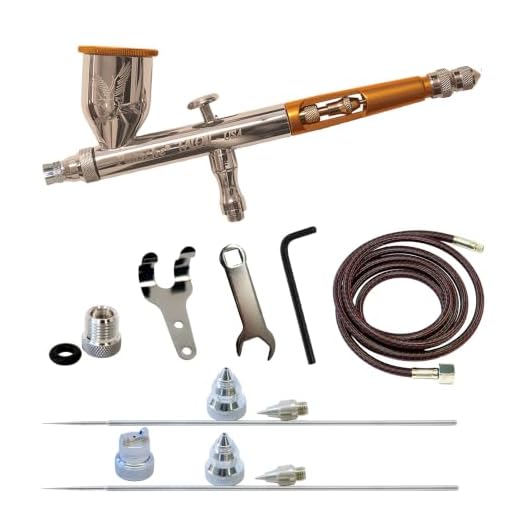


Iwata Eclipse HP BCS Airbrush
Best for: T-shirt artists, larger designs and frequent colour changes
Feed: Siphon
Needle/nozzle: Approximately 0.5 mm on the current HP-BCS configuration
Skill level: Beginner to professional
Why the HP-BCS works well for T-shirts
T-shirts present a very different challenge from small-scale artwork. You may need to cover a large section of fabric, build up several layers and change colours repeatedly.
The HP-BCS is well suited to this type of work.
Its larger paint-bottle arrangement means you don’t have to keep stopping to refill a small gravity cup. You can also keep different colours ready in separate bottles, which is useful when working on detailed or multi-coloured designs.
The larger nozzle is another advantage when using heavier textile paints.
Best overall T-shirt airbrush
If you’re buying an airbrush specifically for T-shirt painting, the Iwata Eclipse HP-BCS is the model we’d look at first.
Unlike a small gravity-feed airbrush, the HP-BCS uses a siphon-feed system. This makes it particularly useful when you’re working with larger amounts of textile paint or switching between several colours.
The Eclipse series is also known for its smooth trigger action and reliable spray performance.
T-shirts present a very different challenge from small-scale artwork. You may need to cover a large section of fabric, build up several layers and change colours repeatedly.
The HP-BCS is well suited to this type of work.
Its larger paint-bottle arrangement means you don’t have to keep stopping to refill a small gravity cup. You can also keep different colours ready in separate bottles, which is useful when working on detailed or multi-coloured designs.
The larger nozzle is another advantage when using heavier textile paints.
Our verdict:
If you’re planning to paint shirts regularly rather than occasionally experimenting with fabric, this is the model we’d choose.

Iwata Eclipse HP-CS Airbrush
Best for: Portraits, fine details and detailed designs
Feed: Gravity
Needle/nozzle: 0.35 mm
Skill level: Intermediate to professional
Iwata Eclipse HP-CS great for detailed artwork
The Iwata Eclipse HP-CS is one of the most popular general-purpose airbrushes for good reason.
Its gravity-feed design and 0.35 mm nozzle make it particularly useful when precise control is more important than maximum paint capacity.
For T-shirt artists creating portraits, realistic artwork, lettering and detailed illustrations, the HP-CS can be an excellent choice.
HP-CS vs HP-BCS
The two airbrushes are closely related, but they serve slightly different purposes.
Choose the HP-BCS if you:
- Paint large areas
- Use relatively large amounts of paint
- Change colours frequently
- Want bottle-fed paint
- Paint T-shirts commercially
Choose the HP-CS if you:
- Concentrate on detail
- Paint portraits
- Prefer gravity feed
- Use smaller quantities of paint
- Want greater control over fine applications
The HP-CS isn’t a bad T-shirt airbrush at all. In fact, it can be an excellent choice for detailed fabric artwork.
It simply isn’t the model we’d automatically choose for large-scale T-shirt production.
Our verdict:
Choose the HP-CS if detail is your priority.
For portraits and intricate artwork, we’d take this over a larger siphon-feed brush.
Badger Patriot 105 – Best Beginner Airbrush for T-Shirts
Best for: Beginners and hobbyists
Feed: Gravity
Needle/nozzle: 0.5 mm
Skill level: Beginner
One of its biggest advantages for T-shirt painting is the 0.5 mm nozzle. Textile paints can be heavier than paints designed for very fine illustration, so a larger nozzle can make the learning process considerably easier.
The Patriot 105 is also relatively straightforward to clean and maintain
Why beginners should consider it
One of the most frustrating things when learning to airbrush is clogging.
Using an extremely fine airbrush with paint that isn’t properly reduced can result in sputtering, inconsistent spray and constant cleaning.
The Patriot 105’s larger nozzle gives beginners a little more tolerance.
It’s also versatile enough that you can use it for other types of airbrushing after you’ve learned the basics.
Our verdict:
The Badger Patriot 105 is one of the best choices for someone learning T-shirt airbrushing.
It’s forgiving, versatile and doesn’t require you to spend a fortune before learning whether T-shirt airbrushing is for you.
Paasche VL – Best Budget Siphon-Feed Airbrush
Best for: Traditional T-shirt airbrushing and larger designs
Feed: Siphon
Skill level: Beginner to professional
Its siphon-feed design makes it particularly suitable for artists who want to keep bottles of different colours ready to go.
The ability to use different spray heads also gives the VL considerable flexibility.
Why choose the Paasche VL?
The biggest attraction is simplicity.
You don’t necessarily need an expensive precision airbrush to create good T-shirt artwork. A reliable siphon-feed model can be extremely effective when paired with good textile paint and the correct compressor.
The VL is particularly attractive if you’re more interested in coverage and production work than ultra-fine illustration.
Our verdict
The Paasche VL is a good choice if you want a traditional, bottle-fed T-shirt airbrush without spending as much as you would on a premium Iwata setup.
Paasche Talon TG-3AS
Best for: Artists who want flexibility
Feed: Gravity, with configurations/adapters available
Skill level: Beginner to advanced
Depending on the configuration, the Talon can be equipped with different spray heads, allowing you to switch between detail work and broader coverage.
That flexibility can be useful for T-shirt artists who don’t want to buy several airbrushes immediately.
Why choose the Talon?
T-shirt designs often contain both large areas and fine details.
For example, you might use a larger setup to lay down a background and then switch to a finer setup for facial features, lettering or highlights.
The Talon’s interchangeable options make this possible.
Our verdict:
The Talon is a strong option for artists who want one versatile airbrush rather than a dedicated T-shirt setup. With three interchangeable head sizes, it allows for fine detail work as well as broader coverage. The PTFE packing can handle both water-based and solvent-based mediums, making it a versatile tool for artists and hobbyists.
Iwata Revolution CR Airbrush
It’s capable of producing a smooth, consistent spray and is relatively easy to control once you’ve developed some experience.
It isn’t specifically designed around T-shirt production in the way a siphon-feed Eclipse can be, but its versatility makes it a useful option.
Our verdict
A good all-rounder, but if T-shirts are your main priority, we’d choose the HP-BCS instead.
Badger 350-9 Single Action Airbrush
Best for: Stenciling, backgrounds and simple designs
Feed: External mix/siphon
Skill level: Beginner
It’s a simpler design and is particularly useful for coverage, stenciling and touch-up work.
It won’t give you the same fine control as a quality dual-action gravity-feed airbrush, but that isn’t necessarily what everyone needs.
For simple T-shirt designs, backgrounds and larger areas, it can still be useful.
Our verdict
A practical choice if you’re primarily interested in straightforward coverage rather than detailed artwork.The Badger Air-Brush Co. 350-9 (M) Single Action Medium Head Airbrush is an external mix airbrush, perfect for base coating, stenciling, and touch up projects. It works well with high viscosity materials like ceramic glazes and hobby enamels. A great choice for beginners and experienced users alike looking for reliable performance at a reasonable price point.
All you kneed to know about airbrushing t-shirts
What Makes a Good Airbrush for T-Shirts?
Not every airbrush is equally suitable for T-shirt painting.
The main things I look for are:
This is where a dual-action airbrush can be particularly useful.
Fabric paint can dry inside an airbrush if you don’t clean it properly.
A relatively simple airbrush that’s easy to strip down and clean is often a better choice than a complicated model that you don’t want to maintain.
Check my full guide on how to clean an airbrush.
Siphon Feed vs Gravity Feed for T-Shirts
One of the biggest decisions you’ll make is choosing between a siphon-feed and gravity-feed airbrush.
Siphon Feed
The paint container sits underneath the airbrush.
Air flowing through the airbrush draws paint up from the bottle.
For dedicated T-shirt work, I generally prefer siphon feed.
Gravity Feed
Paint sits in a cup on top of the airbrush.
Gravity helps feed the paint into the airbrush.
If you’re doing detailed T-shirt artwork, the Iwata HP-CS is an excellent gravity-feed choice.
What Nozzle Size Is Best for T-Shirt Airbrushing?
For T-shirts, I wouldn’t recommend going extremely small.
A nozzle around 0.35 mm to 0.5 mm is a good range.
This is another reason the Iwata Eclipse HP-BCS is such a good choice for T-shirts.
Its 0.5 mm setup provides a good balance between control and paint flow.
What PSI Should You Use for T-Shirt Airbrushing?
The correct PSI depends on the airbrush, paint and nozzle.
A useful starting point is around 25–30 PSI for many fabric airbrush paints.
Createx, for example, states that its Airbrush Colors can work well through a 0.35 mm airbrush at approximately 25–30 PSI, while larger tip sizes can benefit from higher pressure.
Don’t assume that higher PSI is always better.
Too much pressure can cause:
- Overspray
- Poor control
- Excessive paint mist
- Paint drying before reaching the fabric
Start lower and increase the pressure until you get a clean, consistent spray.
A Good Compressor Is Essential for T-Shirt Airbrushing
One part of a T-shirt airbrushing setup that is sometimes overlooked is the compressor.
A good airbrush is only as good as the air supply behind it.
You need a compressor capable of delivering consistent airflow and stable pressure. If the compressor constantly pulses, overheats or struggles to maintain pressure, it becomes much harder to create smooth gradients and consistent lines.
For T-shirt painting, I would strongly recommend using an airbrush compressor with a regulator and moisture trap, and a tank can be particularly useful because it helps provide a steadier air supply.
A compressor designed specifically for airbrushing is generally preferable to a large workshop compressor because it is usually quieter, more compact and easier to control at airbrush pressures.
When choosing a compressor, consider:
I’ve covered the subject in much more detail in my dedicated guide:
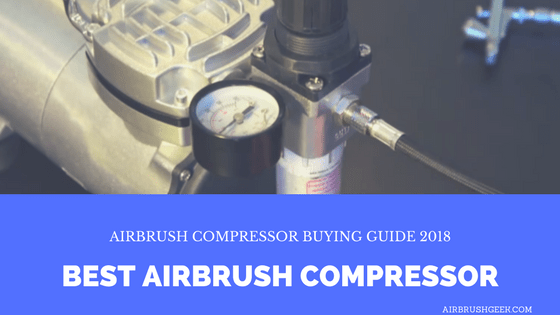
Best Airbrush Compressor – Complete Airbrush Compressor Buying Guide
If you’re buying an airbrush for T-shirts, I recommend reading that guide before choosing your compressor
.
What Paint Should You Use for T-Shirts?
Choosing the right paint is just as important as choosing the airbrush.
You should use paint specifically designed or proven suitable for fabric, rather than simply putting any acrylic paint into your airbrush.
For T-shirts, the paint needs to spray properly, adhere to the fabric and leave a finish that remains reasonably comfortable after drying.
Recommended T-Shirt Airbrush Paints
Createx Airbrush Colors – Best Overall for T-Shirts
Createx Airbrush Colors would be my first choice for someone specifically looking for T-shirt airbrush paint.
This isn’t just because it is popular among airbrush artists. Createx itself describes its original Airbrush Colors as being made to cover quickly with bright, saturated colours and specifically says they are perfect for T-shirt painters.
The paint uses a water-based acrylic resin designed to provide a softer “soft-hand” feel on fabrics. Createx also explains that the softer resin allows the paint to absorb into fabric more readily than Wicked Colors.
That makes the standard Createx Airbrush Colors range particularly attractive for T-shirt work.
Best choice for: Beginners and experienced artists who primarily want to airbrush T-shirts. test

Createx Wicked Colors – Best for Versatility
Createx Wicked Colors is another popular range and is worth considering if you want one paint system that can be used for T-shirts as well as other surfaces.
Wicked Colors can be used on T-shirts, models, leather, wood and many hard surfaces.
However, there’s an important distinction.
Createx says Wicked Colors dry to a harder coating than its standard Airbrush Colors. It also specifically notes that the standard Airbrush Colors are better suited to fabric because they absorb more readily and have a softer resin.
So I wouldn’t automatically choose Wicked simply because it offers stronger coverage.
For someone buying paint primarily for T-shirts, standard Createx Airbrush Colors are my first choice.
Wicked makes more sense if you want a versatile paint system that you can also use for other projects.
Best choice for: Artists who want one paint range for T-shirts and other projects.

Jacquard Airbrush Color – Another Good Fabric Option
Jacquard Airbrush Color is another paint worth considering.
It is a fluid acrylic airbrush paint designed for use across multiple surfaces.
Jacquard also produces dedicated textile paints, so the brand is well established in the fabric-painting market.
For someone specifically concentrating on T-shirts, it’s worth looking at the different Jacquard textile ranges rather than assuming every Jacquard paint is intended for exactly the same application.
Best choice for: Artists who already use Jacquard products or want an alternative to Createx.


What Is the Best Paint for Black T-Shirts?
Painting on a black or dark T-shirt is more difficult than painting on white fabric.
Transparent colours can disappear into a dark background.
For dark shirts, you’ll generally get better results from opaque fabric paint or by building your artwork with an appropriate light/opaque base.
White is particularly useful because it can create a base for brighter colours.
This is one area where the right paint can make a much bigger difference than simply upgrading your airbrush.
Do You Need to Thin T-Shirt Paint?
Sometimes.
You shouldn’t automatically thin every fabric paint you buy.
If the paint sprays correctly through your airbrush, there’s no reason to add unnecessary reducer.
Createx states that its paints can be sprayed directly from the bottle, although they often flow better with 4011 Reducer. Its general recommendation is approximately 10% reducer by volume.
The important thing is to follow the requirements of the specific paint you’re using.
Too much thinning can reduce coverage and make it harder to build colour on the shirt.
What Other Equipment Do You Need?
You don’t need a huge amount of equipment to start airbrushing T-shirts.
A basic setup should include:
Essential Equipment
- Airbrush
- Airbrush compressor
- Air hose
- Pressure regulator
- Moisture trap
- Fabric airbrush paint
- T-shirts
- Spray booth or suitable ventilation
- Stencils if required
- Masking materials
- Cleaning supplies
- Protective gloves
- Respiratory protection appropriate for your paint and workspace
A turntable or T-shirt board can also make positioning your shirt easier.
What T-Shirts Are Best for Airbrushing?
Not every T-shirt produces the same result.
For beginners, I recommend starting with 100% cotton T-shirts or a cotton-heavy fabric that is suitable for textile paint.
Before starting a large design, test your paint on a spare piece of fabric or an inexpensive shirt.
Different fabrics can absorb paint differently, so testing first can save you from ruining an expensive T-shirt.
How to Airbrush a T-Shirt
The basic process is relatively straightforward.
Step 1 – Wash the T-Shirt
Wash the shirt before painting.
This removes manufacturing residues and gives the paint a better surface to adhere to.
Avoid using fabric softener before painting.
Allow the shirt to dry completely.
Step 2 – Stretch the Fabric
Place the T-shirt on a flat surface.
Ideally, use a board or insert inside the shirt so the front and back don’t stick together.
Keep the fabric reasonably tight but don’t overstretch it.
Step 3 – Prepare Your Paint
Mix your fabric paint according to the manufacturer’s instructions.
If necessary, reduce the paint slightly to achieve the correct consistency for your airbrush.
Always strain paint if you suspect there may be particles that could cause clogging.
Step 4 – Set Your Air Pressure
Start around 25–30 PSI and test the spray on a piece of cardboard or spare fabric.
Adjust the pressure according to:
- Paint thickness
- Nozzle size
- Distance from fabric
- Desired coverage
Step 5 – Start With Light Layers
Don’t try to create the final colour in one heavy pass.
Use several light coats.
This gives you much better control and helps prevent paint from soaking excessively into the fabric.
Step 6 – Build Your DesignStart with your larger shapes and background areas.
Then gradually add:
- Shadows
- Highlights
- Details
- Outlines
- Colour transitions
Keep the airbrush moving rather than holding it stationary.
How Close Should You Hold the Airbrush?
The ideal distance depends on your paint, pressure and desired effect.
For general T-shirt coverage, you may work several inches away from the fabric.
For detail, you can move closer.
The closer you get:
- The narrower the spray
- The stronger the paint concentration
- The greater the risk of flooding the fabric
The further away you work:
- The wider the spray
- The softer the effect
- The more overspray you may create
Practice is the best way to find the right distance.
How Do You Stop Paint From Bleeding?
Paint bleeding is one of the most frustrating problems when airbrushing T-shirts.
It can happen when too much paint is applied too quickly.
To reduce bleeding:
- Use lighter coats
- Don’t flood the fabric
- Avoid excessive pressure
- Keep the airbrush moving
- Allow layers to dry
- Use the correct paint consistency
- Don’t hold the airbrush too close for too long
Stencils can also help create clean edges.
How Do You Heat-Set Airbrush Paint on a T-Shirt?
Many fabric paints need to be properly cured or heat-set to improve durability.
However, the exact curing method depends on the paint manufacturer.
Some textile paints are heat-set with an iron, while others have different curing requirements.
Always check the instructions for the particular paint you’re using.
Don’t assume that every airbrush paint can be treated in exactly the same way.
How Do You Wash an Airbrushed T-Shirt?
Once your design has been properly cured according to the paint manufacturer’s instructions, washing should be done carefully.
As a general approach:
- Turn the T-shirt inside out
- Use a gentle wash cycle
- Avoid very high temperatures
- Avoid aggressive detergents
- Don’t use excessive heat unless recommended
- Air dry when practical
The better the paint has been cured and the more carefully the shirt is washed, the longer the artwork should remain attractive.
Can You Use a Cheap Airbrush for T-Shirts?
Yes, but there are limitations.
A cheap airbrush can be useful for learning the basics, but fabric painting can place greater demands on an airbrush than fine-detail hobby work.
You may encounter:
- Inconsistent paint flow
- Clogging
- Poor seals
- Difficult cleaning
- Inconsistent trigger control
- Limited replacement parts
If you’re serious about T-shirt airbrushing, I’d rather buy one decent airbrush and a good compressor than buy several very cheap airbrushes.
Is an Expensive Airbrush Necessary?
No.
You don’t need to spend hundreds of euros or dollars to start painting T-shirts.
The important thing is to choose an airbrush with:
- Appropriate nozzle size
- Reliable paint flow
- Good parts availability
- Easy cleaning
- A suitable feed system
- Enough control for your artwork
The Badger Patriot 105 is a good example of an airbrush that doesn’t require you to spend a fortune to get started.
The Iwata Eclipse range is a step up if you want better long-term performance and versatility.
Should You Buy More Than One Airbrush?
If you are just starting, I wouldn’t.
Start with one good airbrush and learn how to use it properly.
Once you’re producing more artwork, having two airbrushes can be useful.
For example, you could have:
Airbrush 1: 0.5 mm for coverage and fabric painting
Airbrush 2: 0.35 mm for detail work
This gives you the flexibility to switch between coverage and fine detail without constantly changing your setup.
Best Airbrush for T-Shirts for Beginners
If you’re a complete beginner, I’d narrow the choices down to three.
Best Beginner Budget Choice
Badger Patriot 105
Simple, reliable and capable of handling general T-shirt airbrushing.
Best Beginner Siphon-Feed Choice
Paasche VL
A good option if you want the advantages of a siphon-feed system and larger paint capacity.
Best Long-Term Choice
Iwata Eclipse HP-BCS
If your budget allows it, this is the airbrush I’d buy if I knew I wanted to concentrate on T-shirt painting.
Best Airbrush for Professional T-Shirt Artists
If T-shirt painting is going to become a serious business, I’d choose the Iwata Eclipse HP-BCS as the primary airbrush.
Its combination of:
- 0.5 mm nozzle
- Siphon-feed system
- Larger paint capacity
- Good spray control
- Reliable construction
makes it particularly well suited to larger fabric designs.
For detailed work, I’d pair it with an Iwata Eclipse HP-CS.
That gives you:
HP-BCS → coverage and general T-shirt spraying
HP-CS → detail and fine artwork
Common T-Shirt Airbrushing Problems
The Airbrush Keeps Clogging
Possible causes include:
- Paint is too thick
- Paint wasn’t strained
- Dried paint inside the nozzle
- Incorrect reducer
- Low-quality paint
- Too much pigment
Clean the airbrush thoroughly and check that your paint is suitable for the nozzle size.
The Paint Comes Out Too Fast
Try:
- Reducing air pressure
- Moving the airbrush further away
- Reducing paint flow
- Applying lighter coats
The Paint Is Too Transparent
This can happen when:
- The paint is too thin
- You’re using transparent colors
- You’re painting on a dark shirt
- You’re applying very light coats
For dark shirts, consider using an appropriate opaque paint or base.
The Paint Looks Patchy
Try:
- More consistent airbrush movement
- Slightly closer spraying
- Correcting your paint consistency
- Using several light coats
- Checking your air pressure
The Paint Bleeds Into the Fabric
You’re probably applying too much paint.
Reduce the amount of paint being deposited and build the colour gradually.
Frequently Asked Questions
My top choice is the Iwata Eclipse HP-BCS because its 0.5 mm setup and siphon-feed design make it particularly suitable for spraying larger amounts of fabric paint.
For larger T-shirt designs, I generally prefer siphon feed because of the larger paint capacity.
Gravity feed is excellent for detailed work and smaller amounts of paint.
A 0.35 mm to 0.5 mm nozzle is a good range.
A 0.5 mm nozzle is particularly useful for larger fabric designs and heavier paints.
A good starting point is around 25–30 PSI, although the correct pressure depends on your paint, nozzle and airbrush.
Createx specifically notes that its Airbrush Colors can work well through a 0.35 mm tip at around 25–30 PSI.
My first choice is Createx Airbrush Colors because the manufacturer specifically describes the range as suitable for T-shirt painters and designed with a softer acrylic resin for fabric.
I wouldn’t recommend simply putting ordinary acrylic craft paint into an airbrush.
Use paint specifically designed for airbrushing and/or fabric applications.
Do I need a compressor to airbrush T-shirts?
Yes.
A compressor provides the controlled airflow needed to atomize the paint.
For T-shirt painting, a compressor with a regulator and moisture trap is highly recommended. A tank can also help provide a steadier air supply.
See my complete Best Airbrush Compressor guide for help choosing one.
Can I airbrush black T-shirts?
Yes.
However, black and dark fabrics require more careful paint selection.
Opaque colors and white undercoats can be particularly useful because transparent colors can disappear into dark fabric.
Yes.
The HP-CS is an excellent T-shirt airbrush, particularly for detailed artwork.
However, I prefer the HP-BCS for larger T-shirt designs because its siphon-feed system gives you greater paint capacity.
Yes.
The Patriot 105 is a good beginner-friendly option and its 0.5 mm configuration makes it suitable for fabric painting
After considering the different airbrush designs, nozzle sizes, paint capacities and the requirements of fabric painting, my overall winner is the Iwata Eclipse HP-BCS
The HP-BCS is particularly well suited to T-shirt painting because it combines a 0.5 mm nozzle with a siphon-feed paint system.
That combination gives you good paint flow and allows you to work with larger quantities of paint than many gravity-feed airbrushes.
For detailed T-shirt artwork, the Iwata Eclipse HP-CS is an excellent alternative.
For beginners, the Badger Patriot 105 offers a good balance between price, reliability and performance.
And if you want a traditional siphon-feed airbrush at a lower price, the Paasche VL remains an interesting option.
My Final Ranking
Best Overall – Iwata Eclipse HP-BCS
Best choice for dedicated T-shirt painting, especially larger designs.
Best for Detail – Iwata Eclipse HP-CS
Excellent choice for detailed artwork, lettering and fine shading.
Best Beginner – Badger Patriot 105
A straightforward and reliable starting point.
Best Budget Siphon Feed – Paasche VL
Good option if paint capacity and siphon-feed operation are priorities.
Best Versatile – Paasche Talon
Useful if you want one airbrush for T-shirts and other applications.
Best General Purpose – Iwata Revolution CR
A dependable all-rounder.
Best for Simple Coverage – Badger 350-9
A practical option for basic coverage and stencilling.
Final Advice Before You Buy
Don’t make the mistake of thinking that the airbrush alone determines the quality of your T-shirt artwork.
Your final result depends on the whole system:
Airbrush + Compressor + Paint + Nozzle + PSI + Technique + Fabric Preparation
A good airbrush connected to a poor compressor can still give you disappointing results.
Likewise, an expensive airbrush won’t compensate for unsuitable paint or incorrect pressure.
If you’re starting from scratch, I’d build the setup around a 0.5 mm airbrush, a good regulated compressor with a moisture trap, and quality fabric airbrush paint.
For most people, my preferred combination would be:
Iwata Eclipse HP-BCS + good airbrush compressor + Createx Airbrush Colors
That gives you a setup capable of producing everything from simple T-shirt graphics and lettering to much more advanced artwork.
And if you also want to create fine details, you can eventually add the Iwata Eclipse HP-CS as your detail airbrush.